
What does purposeful play look like?
Inside the thinking behind the Developmental Playroom: choosing what to play, making a plan, and sharing space with friends.
Explore the interview seriesThe Purposeful Play Framework
The Purposeful Play Framework combines a whole-child curriculum, hands-on discovery, and teaching shaped around your child. Through play, your child builds early academic skills, friendships, and independence—with teachers who notice their progress and plan what comes next.
Designed by Dr. Michelle Peterson, Ed.D., and built on Experience Early Learning.
Your child enjoys the enrichment subjects offered on their attendance days. All are included in tuition.
Responsive Teaching
What your child is ready for today helps shape what comes next.
Teachers observe and assess their strengths, interests, and skills that need practice.
Teacher-guided activities and child-led exploration give those skills room to grow.
As your child progresses, teachers adjust the support and challenges they offer.
In the Classroom
Imagine a morning at the block table.
One child might compare sizes. Another might describe a building plan or invite a classmate to join.
A teacher notices which skills each child is practicing and offers a question, material, or next challenge to support them.
The same playful experience can support different learning goals.
Daily Rhythm & Playroom
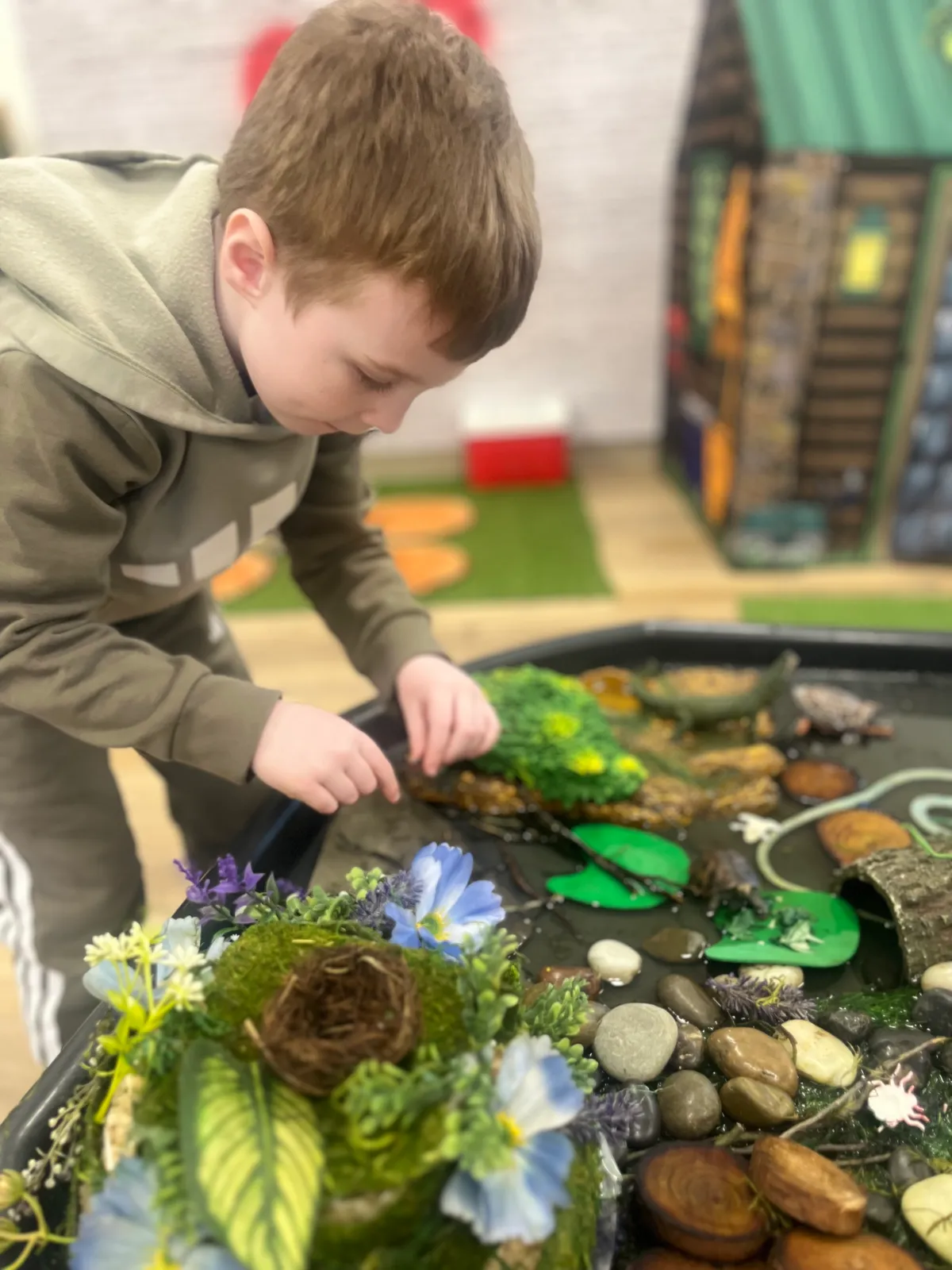
An ocean, a rainforest, a place to imagine. Teachers thoughtfully prepare a new world each month. Your child chooses what to explore, what to create, and who to play with.
Inside the thinking behind the Developmental Playroom: choosing what to play, making a plan, and sharing space with friends.
Explore the interview seriesEach theme lasts approximately one month, connecting classroom learning and the playroom through shared ideas and materials.
Monday: Spanish. Tuesday: STEM. Wednesday: Art. Thursday: Communication. Friday: Music & Movement. Your child enjoys the subjects offered on their attendance days, with no extra fees or supply lists.
Academic Play is 1.5 hours in the 3's and 4's programs, and 2.5 hours in Kindergarten Prep and Kindergarten.
Partnership & Guidance
Daily photos and updates in Brightwheel keep you connected. At parent-teacher conferences, you'll talk through developmental assessments and your child's learning path.
Experience Early Learning's formal developmental assessments cover cognitive, social-emotional, physical, and creative development. They inform daily planning throughout the year. In classes of 10–12 with a 5:1 ratio, teachers notice where your child is ready for a challenge and where they need support.
Behavior is communication. On a hard day, we look for the need or skill behind the behavior, help children name their feelings, and coach them through conflicts. Children are never shamed or labeled.
Common Questions
How play-based learning builds academic readiness, how assessments work, and what's included in tuition.
Ask Us Anything
Come meet the teachers, explore the playroom, and see how a morning unfolds. Or ask us a question here—we'd love to talk.
Dr. Michelle Peterson will reply personally by email. She responds on weekdays, usually the same day.
Your information is private. We'll only use it to answer your question. Privacy Policy
Visit Spark Academy
Come meet the teachers, explore the Developmental Playroom, and see how a morning unfolds.
Prefer to call? 309-291-3292 We may be in the classroom. Leave a message. We return calls on weekdays, usually the same day.
Share your name and a way to reach you. We'll follow up to arrange a time for your family.
Explore the classrooms, meet the team, and talk about the program, schedule, and start date that fit.
When you're ready, we'll guide you through enrollment and help your child feel at home.