The Spark journal · Learning Through Play
Learning you can notice in the little things.
A plan explained. A tower rebuilt. A turn worked out together. Preschool learning does not always come home on paper.
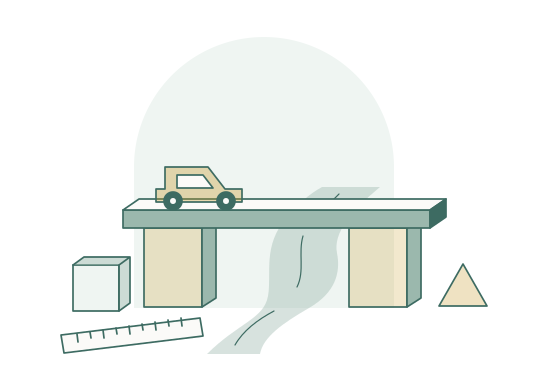
Imagine a child building a garage for toy cars. The entrance is too low. They take off the roof, look for taller blocks and tell another child where the door should go. There may be nothing to put in a backpack afterward, but there is plenty to talk about.
That is an illustrative example, not a story about a particular Spark student. It shows why a finished project gives only a small view of what a preschooler is learning. The decisions, words, movements and help along the way matter too.
Preschool should support language and early literacy, mathematical and scientific thinking, relationships, emotional development, movement and growing independence. Children also need opportunities to practice how they learn: noticing, wondering, trying, asking for help and returning to an idea.
The Head Start Early Learning Outcomes Framework describes connected areas of development and emphasizes that children follow different paths and rates of learning. It is a useful reminder to look at the whole child rather than treating one skill as a verdict on their progress.
Look for the thinking inside the activity.
The examples below are things you might notice, not a test your child needs to pass. A teacher can help you understand what a particular moment means in the context of your child's experience and the support they received.
Words that help an idea travel
In the pretend garage, a child might explain, “The truck needs a bigger door.” Another might point, demonstrate with a block or ask for help finding the piece they need. A conversation gives children a reason to share an idea and listen to someone else's.
Early literacy also includes enjoying books, noticing print and using marks to communicate. A child might make a sign for the garage, tell an adult what to write on it or use a favorite story as the beginning of their play.
A useful question for the teacher is: “How is my child sharing ideas, and what helps them join a conversation?” That invites a fuller answer than asking only which letters they recognize.
Numbers, shapes and questions with a purpose
A child lining up cars may wonder whether every car has a parking space. Another may compare two blocks to find one long enough for a roof. These are opportunities to explore quantity, size and shape in a situation that matters to the child.
If the roof keeps falling, the question changes: what could hold it up? Predicting, testing and looking at what happened give an adult something concrete to discuss with the child. The aim is not to announce that one tower proves mastery of a math or science skill. It is to notice the problem the child is working on.
Ask: “What kinds of problems does my child like to solve? What do they try when the first idea doesn't work?”
Relationships that need practice
Two children can have different plans for the same space. One wants a garage; the other wants a road through it. Working together can involve explaining a preference, hearing another idea, waiting, accepting help or making room for a different plan.
An adult's support matters. A disagreement is an opportunity to teach the next step, not simply a moment to label a child as good or difficult. Ask: “What helps my child enter play with others, and what support do they need when plans clash?”
Hands, movement and everyday independence
Placing a block carefully, turning a page, using a paintbrush or opening a container involves physical skills as well as an idea. Running, balancing and climbing offer other kinds of movement practice. Ordinary routines can also give children manageable jobs to try with help.
Notice the action and the assistance: “They held the container while I loosened the lid.” That describes more than “They can do it” or “They can't.” Ask the teacher which parts of a familiar routine your child is taking on and where help still makes participation possible.
The National Association for the Education of Young Children's guide to preschool learning describes learning across physical, social, emotional, language and thinking skills. These areas overlap; a single activity can make room for several of them.
Purposeful play includes thoughtful teaching.
Materials alone do not tell you what a child is learning. Look for what happens between the child, the activity and the adult.
A teacher might offer a different material, model a useful word, help two children hear each other's plans, or wait while a child tests an idea. The helpful response depends on what the child is trying to do. Sometimes a question extends the play. Sometimes the child needs a demonstration, a smaller step or time to keep exploring.
NAEYC's description of a high-quality preschool emphasizes planning and adapting activities, achievable challenges, observation and communication with families. That gives you useful questions for a visit:
- What are the children working on in this activity?
- How do you decide when to help and when to give them more time?
- How do you notice progress that does not produce a finished piece of work?
- How does what you notice influence what you offer next?
At Spark, the Purposeful Play Framework shapes a preschool morning that includes Academic Play, the Developmental Playroom, Daily Enrichment, outdoor play and snack. See the daily rhythm to picture how those experiences fit together. The name of an activity is the starting point; the child's experience within it is what you want to understand.
Make room for an unfinished answer.
“What did you learn today?” can be a very big question after a busy morning. Try something smaller: “What did you make?” or “Was there something you wanted to try again?” If your child has little to say, leave room to talk later.
If something comes home, you can invite a story about the process: “Tell me about this part.” If nothing comes home, you can still ask the teacher about a recent interest or challenge. An empty backpack does not tell you whether the morning was rich in learning.
At home, choose one ordinary invitation rather than turning the evening into another school session. Read a familiar book and listen to the part your child wants to discuss. Offer paper and crayons for a pretend sign. Let them help solve a small practical problem, such as finding a place for the toy cars. Follow what catches their interest, and keep the activity workable for your family.
Bring one useful observation to the teacher.
You do not need a new checklist for every activity. Our existing Kindergarten Readiness Conversation Planner has space for something you noticed, a question for the teacher and a shared next step. You can use those prompts during preschool too; it is a conversation aid, not a readiness score or diagnostic test.
Download the free conversation planner — PDF, 1 page.
A plain note works as well. Write what happened, what help was available and what you are curious about. For example: “They explained how they wanted the garage to look, but needed help joining another child's game. What are you noticing at school?” This is suggested language to adapt, not a report about any child.
Questions families ask about preschool learning.
Do letters and numbers still matter in a play-based preschool?
Yes. Look for meaningful opportunities to explore books, print, sounds, counting, shapes and quantities, alongside relationships, movement and curiosity. Ask the teacher how those opportunities are planned and how they respond to your child's next step.
Should every child bring home the same project?
Matching finished products are not the only way to see learning. Ask what choices children made, what they tried and what the teacher noticed. A drawing, a construction or a conversation can offer different information about the process.
How can I tell whether my child is making progress?
Ask for specific examples over time and what support was needed. A single afternoon cannot tell the whole story. If you have a concern, share it directly with the teacher so you can discuss what each of you is noticing and agree on an appropriate next step.
Does every play activity need an adult lesson attached?
You can be interested without directing every moment. Offer suitable materials, be available and notice what your child is trying. Leave room for them to choose, experiment and return to an idea; ask the teacher for guidance if you want help supporting a particular goal.
Come see what a preschool morning can hold.
When you visit, look beyond what is displayed on the wall. Notice how children use materials, how adults respond and how a child's idea becomes something to explore together.
Schedule a tour of Spark Academy to meet the team and ask about your child's learning. Bring your questions; we can talk about what a purposeful, play-based morning could look like for them.
Put an idea into practice.
Find words for a hard moment, a plan for preschool, or a new way to play together. Dr. Michelle Peterson’s resources turn these everyday questions into practical next steps for families everywhere.
What can I say? Parenting Scripts
What should we prepare for? The Parent Guide
What could we play? 365 Invitations to Play
How do we make a plan? The Printable Toolkit
Paid PDF downloads. Read on screen or print selected pages.